The Roar of Warships vs. Tehran’s Defiance: Are Clouds of War Looming Over the Iran-US Crisis? 🛡️
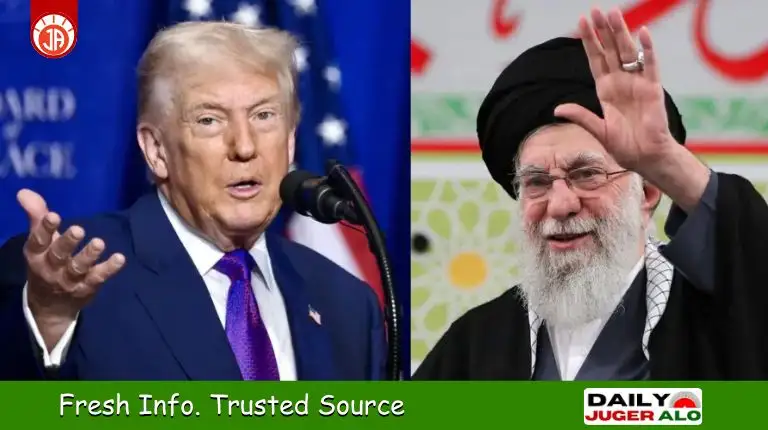
Today’s News Iran US Tensions : The scorching deserts of the Middle East are currently windswept with the scent of gunpowder. Imagine, on one side, the maneuvers of a massive American nuclear-powered “beast” in the Persian Gulf; on the other, Tehran’s sky-high, uncompromising stance. In this face-off between Iran and the United States, the world now stands on the brink of extreme uncertainty. While the Pentagon issues one stringent condition after another, why is Iran refusing to wave the “white flag” and instead choosing the path of confrontation?
Diplomatic analysts suggest that Tehran views Washington’s demands not merely as political requests, but as “total surrender.” For this reason, Tehran is preparing for a fight, looking the world’s most powerful military right in the eye. If you think this struggle is only about power, you are mistaken—deep within lies a brutal battle for survival. In today’s special report, we will explore why Iran is risking conflict instead of submitting.
Read More: United Healthcare Stock Under Spotlight After Earnings and 2026 Forecast
US Military Readiness: A Mere Signal or a Final Strike? 🚢
The US military presence in the Middle East is no longer limited to diplomatic signaling. The American aircraft carrier USS Abraham Lincoln is currently positioned right next to Iranian waters. The presence of its strike group is being interpreted as a preliminary preparation for a major operation.
That’s not all. Another powerful carrier, the USS Gerald R. Ford, was last spotted near the Strait of Gibraltar and is now moving rapidly eastward. The sheer volume of war equipment and manpower deployed makes it clear that Washington is preparing multi-layered military options.
Washington’s Conditions: Why Does Iran Call Them “Surrender”? 🚫🤝
In the Iran vs. America feud, the negotiating table is practically dead. The conditions set forth by US Secretary of State Marco Rubio are deemed impossible for Iran to accept. Let’s look at the demands at a glance:
- Uranium Enrichment: A total halt to all uranium enrichment activities.
- Missile Control: Reduction of the range of ballistic or long-range missiles so they no longer pose a threat to Israel.
- Regional Influence: An end to support for the “Axis of Resistance” or regional armed groups.
- Internal Change: Changes to Iran’s internal governance and treatment of its citizens.
From Tehran’s perspective, accepting these terms would mean destroying the core architecture of its own national security.
Iran’s “Axis of Resistance” and Defense Strategy ⚔️
Why is the Iran-US tension so intense? Because for decades, Tehran has built a powerful network. Their strategy is rooted in:
- The Axis of Resistance: Utilizing armed groups in Lebanon, Syria, and Yemen, Iran seeks to keep the war far from its own borders.
- Missile Power: Although Iran’s air force is aging, its ballistic missile technology is world-class. The distance from Iran to Israel is approximately 1,000–2,000 km by air—a distance Iranian missiles can easily cover.
- Threshold Capability: While Iran may not have built a nuclear bomb yet, it has established the “infrastructure” and capability to do so. This serves as a powerful leverage tool.
Iran vs. America at a Glance: Distance and Power 📊
| Subject | Information |
| Distance: Iran to America | Approx. 11,600 km (by air) |
| Distance: Iran to Israel | 1,000 to 2,000 km (depending on location) |
| Primary Weapons | Ballistic Missiles & Drones (Iran) |
| US Warships | USS Abraham Lincoln & USS Gerald R. Ford |
| Current State of Iran | Economic sanctions & internal protests |
The Biggest Risk for Khamenei: Power or War? ⚠️
For Iran’s Supreme Leader Ayatollah Ali Khamenei, taking the risk of a limited war with the US under Donald Trump might be less dangerous than a strategic surrender. However, this path is fraught with peril:
- Leadership Succession: A US strike could directly target top leadership, destabilizing a reign of over three decades.
- IRGC Vulnerability: Attacks on the Islamic Revolutionary Guard Corps (IRGC) would weaken the reconstructed state apparatus within the country.
- Iran Protests: In recent years, protests in Iran have made global headlines. Due to economic hardship and repression, the public is angry. The shock of war could turn this internal resentment into an explosion.
Economic Crisis: Tehran on the Edge 📉
The current situation in Iran is economically fragile. Inflation and sanctions on oil exports have left the purchasing power of ordinary people at rock bottom. If US strikes hit oil infrastructure, Iran’s economy could completely collapse. Tehran believes that yielding now would mean losing not just its economy, but its political existence.
The US Risk: Is War the Solution? 🤔
Washington’s risks are not insignificant either. The Iran-US relationship has always been bitter (with very few “sweet” moments). While America is militarily superior, Iran’s command structure is not easily dismantled.
Recent conflicts have taught Tehran how to regroup under pressure. If central authority in Tehran weakens, a power vacuum will emerge. This vacuum could give rise to even more radical and fragmented power centers, creating an even bigger headache for America.
FAQ: Frequently Asked Questions on the Iran-US Crisis 👇
1. Is the US a friend of Israel or Iran?
The US is historically Israel’s closest and most strategic ally. Since the 1979 Revolution, the US and Iran have had no friendly relations; instead, they view each other as enemies.
2. When did America attack Iran?
While there hasn’t been a full-scale war, the US launched a major attack on Iran’s navy and oil platforms in 1988 via “Operation Praying Mantis.” Additionally, the 2020 drone strike killing General Qasem Soleimani was a significant military action.
3. Why the conflict between Iran and America?
Mainly due to Iran’s nuclear program, its anti-Israel stance, and its challenge to US dominance in the Middle East. The 1979 Tehran embassy hostage crisis also sowed the seeds of this enmity.
4. What is the agreement between Iran and the US?
The historic nuclear deal (JCPOA) was signed in 2015. However, Donald Trump withdrew from the deal in 2018. Currently, there is no effective agreement in place.
5. Does Iran have nuclear weapons?
Officially, Iran claims its program is peaceful. However, international analysts believe Iran possesses “Threshold Capability”—the technology and equipment to develop weapons at any time.
Final Words
Ultimately, Ayatollah Khamenei stands in a position where favorable options are few. Accepting Washington’s conditions means abandoning a long-established defense strategy. On the other hand, choosing the path of conflict carries extreme internal and external risks.
Tehran now seems to be leaning toward “the best of the worst”—choosing a limited conflict to avoid the “absolute worst,” which is total surrender. Which way the chess pieces of the Middle East move will depend on the next political moves from both Tehran and Washington.